BYD Xuanji A3 unveiled — China's first 4nm autonomous driving chip explained
- 1BYD Xuanji A3 unveiled, China's first mass-produced automotive-grade 4nm chip
- 2Three-chip configuration delivers over 2,100 TOPS of computing power
- 3Supports Level 3 and Level 4 autonomous driving applications
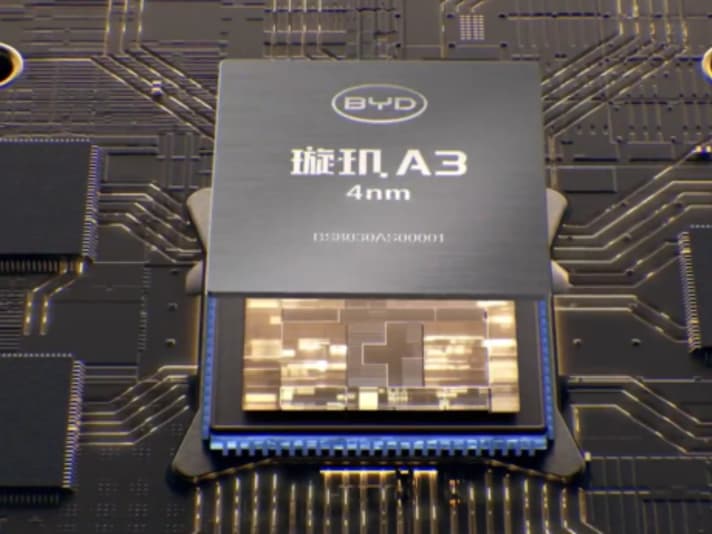
BYD has moved from being the world's largest EV manufacturer to now being one of the very few automakers on the planet that designs and manufactures its own automotive-grade chips. At its intelligence strategy event titled 'Dare to Be Bold', held on Wednesday evening, BYD officially unveiled the Xuanji A3, which it describes as China's first mass-produced automotive-grade chip built on a 4-nanometer fabrication process.
For a company already known for making its own batteries, motors, and power electronics, this is the final piece in a vertical integration strategy that few companies anywhere in the world have attempted at this scale.
How BYD Xuanji A3 actually work?
The Xuanji A3 is a new smart driving chip developed by BYD for its next-generation ADAS and autonomous driving systems. Built on a 4nm process, it is currently the most advanced automotive chip from a Chinese automaker to enter mass production.
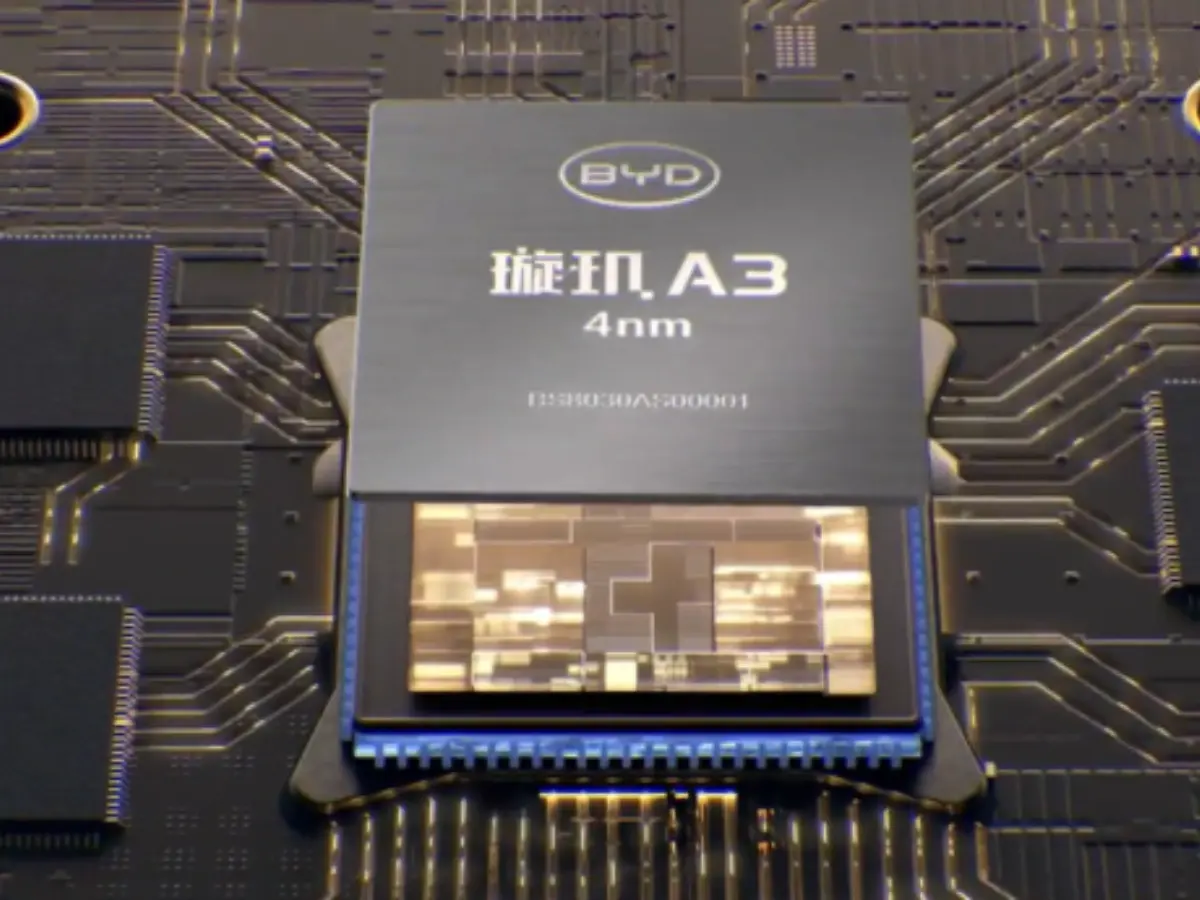
A setup of three Xuanji A3 chips can deliver more than 2,100 TOPS (trillion operations per second) of computing power, with each chip contributing around 700 TOPS. However, BYD says the focus is not just on raw computing power. Thanks to its in-house software and algorithms, the company claims the chip can use its computing resources far more efficiently in real-world driving situations.
The Xuanji A3 is also designed around a centralized computing architecture. Instead of running the infotainment system, ADAS functions, and core vehicle controls on separate systems, the chip can manage all three on a single high-performance platform. This helps reduce response times and allows the vehicle to process and react to information more quickly and efficiently.
Also Read: Toyota Ebella battery rental and assured buyback — Everything you need to know
Where it stands in the Chinese chip race
BYD is not the only Chinese automaker developing its own chips. NIO has already introduced its 5nm Shenji NX9031 chip, which is used in Nio and Onvo models. Li Auto recently unveiled the 5nm Mach M100 chip, while XPeng is rolling out its in-house Turing AI chip across its lineup.
BYD's Xuanji A3 uses a more advanced 4nm process, which typically allows for better performance and energy efficiency. In terms of computing power, a three-chip Xuanji A3 setup delivers over 2,100 TOPS, compared to 1,280 TOPS for Li Auto's Mach M100 and around 750 TOPS for XPeng's Turing chip. While these figures do not directly translate into real-world driving performance, they show that BYD is targeting the upper end of the intelligent driving and automotive computing space.
BYD's new 4nm chip enters mass production for future EVs
What makes the Xuanji A3 announcement significant is the scale of the semiconductor ecosystem that BYD has built over the past two decades. The company entered chip development in 2002 and today operates five wafer fabrication plants, employs more than 7,000 chip engineers across four R&D centres, and has developed over 2,000 chip products for automotive and consumer electronics applications. BYD says its investment in chip-related research and development has exceeded 100 billion yuan (around $14.75 billion).
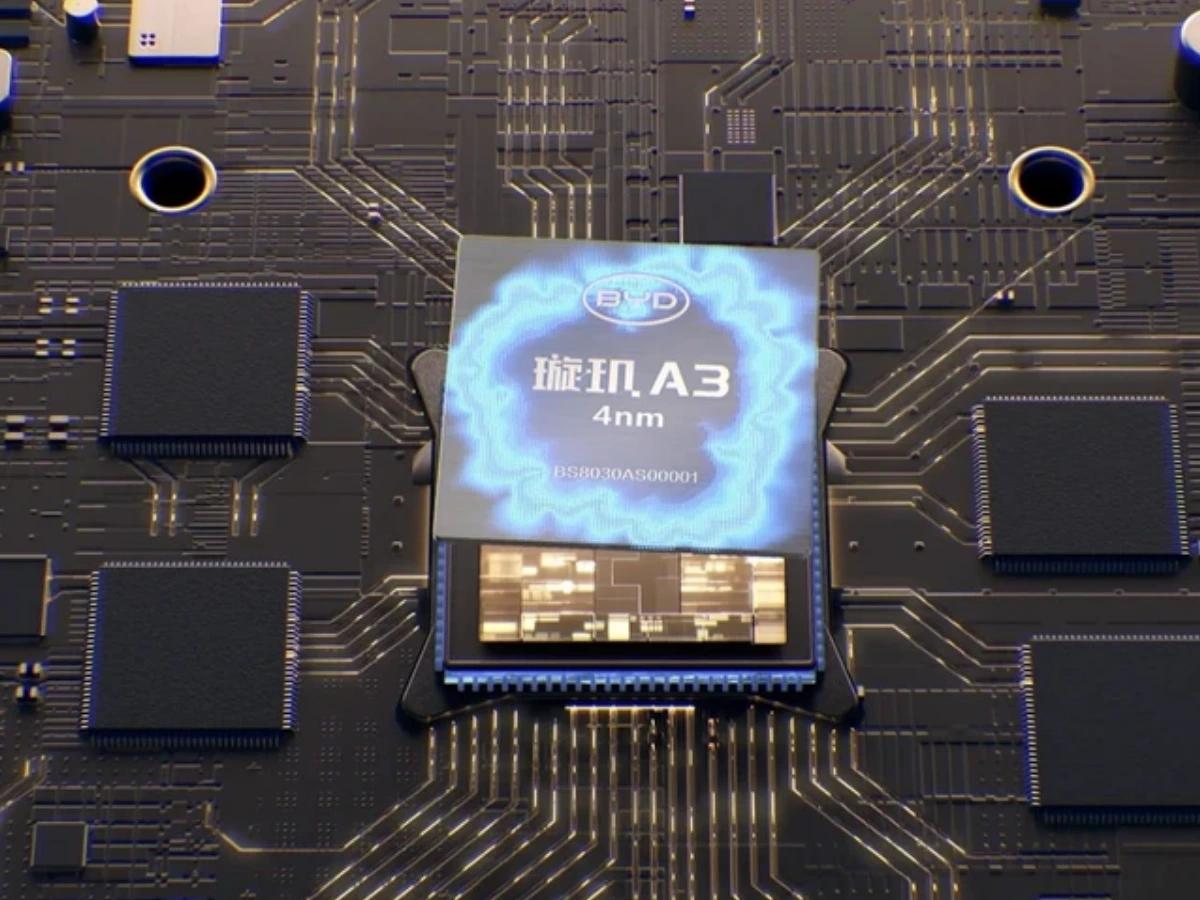
BYD also claims to be the only automaker with end-to-end chip manufacturing capabilities, covering everything from chip design and architecture development to wafer production and testing. If accurate, this gives the company control over a large part of the technology stack used in its vehicles, from batteries and power electronics to advanced computing systems.
The Xuanji A3 will power BYD's DiPilot 300 assisted driving system, also known as "God's Eye B," and is designed to work with high-resolution LiDAR sensors for more advanced driver-assistance functions.
Importantly, BYD has confirmed that the Xuanji A3 is already in large-scale production. This is not a concept or prototype technology, the chip is being manufactured and is expected to appear in production vehicles in the near future.
Also Read: Mitsubishi Pajero is officially coming back with a world premiere this autumn
Stay updated with all the latest happenings & developments in the automotive world by joining our official AUTOVERSE WhatsApp community. Also, don’t forget to check out our YouTube channel, AUTOVERSE by Cars24, for key details & visuals.