Skoda Octavia passes ANCAP crash test with 5-star rating and 85% adult protection
- 1Applies to all variants built from July 2025
- 2On sale from March 2026 in Australia and New Zealand
- 3Scored 85% for adult occupant protection and 81% for child occupant protection
The updated Skoda Octavia has come through ANCAP testing with a 5-star safety rating, with results published in May 2026. This rating applies to all variants of the Octavia built from July 2025 and available on sale from March 2026 in Australia and New Zealand. It covers both sedan and wagon body styles across all engine and powertrain options in the lineup.
The rating was assessed against the 2023-2025 ANCAP criteria, the same stringent framework being applied to most new cars today, and is valid until December 2031. Testing for this result was conducted across 2019, 2022, and 2025. With scores above 80% in all four categories, the Octavia delivers a confident performance, though a few areas pull it short of a near-perfect sheet.
Skoda Octavia ANCAP — Adult occupant protection

| Adult occupant protection | Score |
|---|---|
| Frontal Offset (MPDB) | 4.02 / 8 |
| Full Width Frontal | 7.33 / 8 |
| Side Impact | 6.00 / 6 |
| Oblique Pole Impact | 5.29 / 6 |
| Whiplash Protection | 3.58 / 4 |
| Far Side Impact | 4.00 / 4 |
| Rescue & Extrication | 4.00 / 4 |
| Total Score | 34.22 / 40 (85%) |
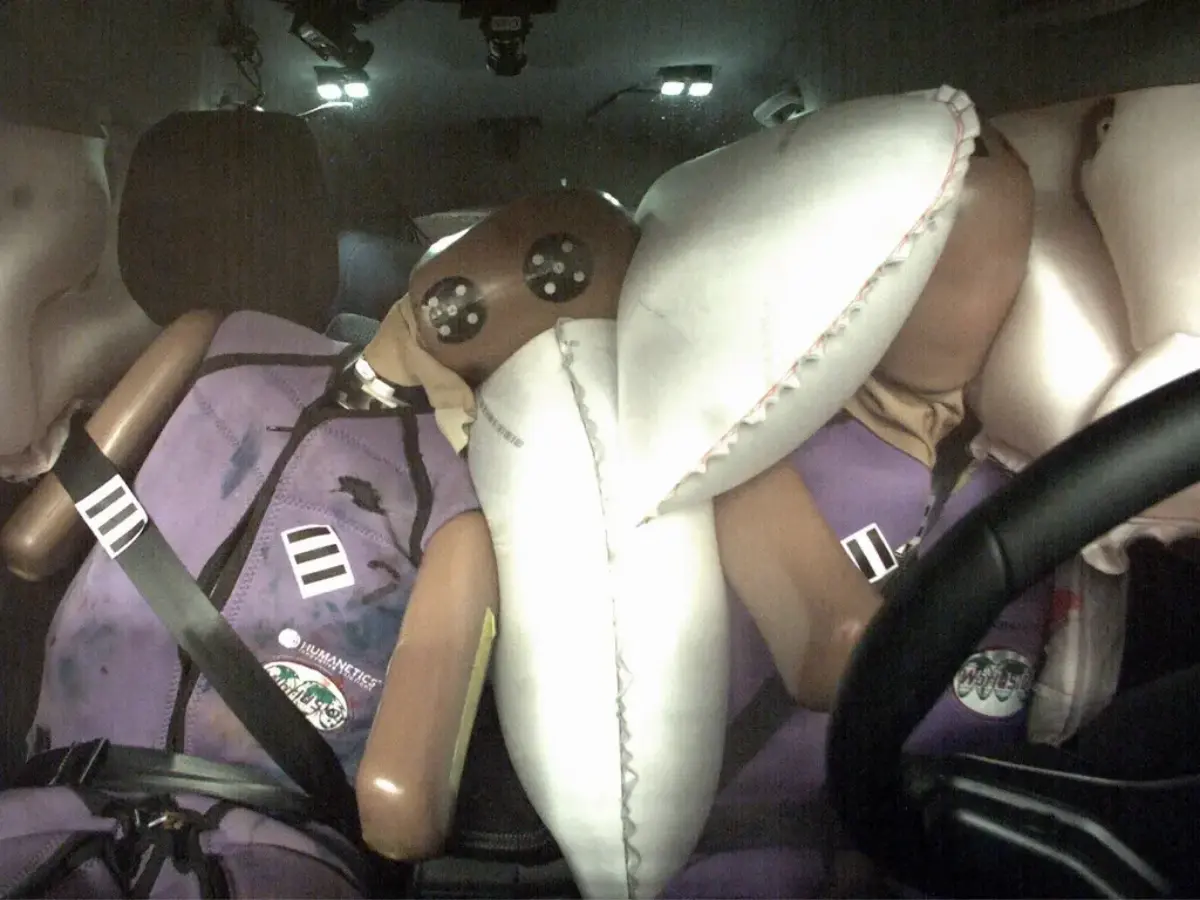
The Skoda Octavia scored 85% for adult occupant protection, delivering a strong overall result with a few areas of concern. In the 50 km/h frontal offset (MPDB) test, the passenger compartment remained stable. Protection for the head, neck, and upper legs was rated good for both the driver and front passenger, while lower leg protection was rated adequate. Driver chest protection was rated marginal, contributing to the score deduction in this category. The Octavia also received a compatibility penalty of 5.57 points out of 8.00, indicating a moderate risk to occupants of another vehicle in the event of a collision.
In the 50 km/h full-width frontal test, chest protection for the driver was rated adequate, while the rear passenger's chest protection was rated marginal. All other body areas scored good protection.
The side impact test at 60 km/h was one of the Octavia's strongest results, with good protection for the head, chest, abdomen, and pelvis, earning maximum points. In the 32 km/h oblique pole test, most body regions again received good ratings, although driver chest protection remained marginal.
Far-side impact protection and whiplash performance were also rated well. The sedan is equipped with a centre airbag designed to reduce occupant-to-occupant contact during side impacts, and the system performed effectively during testing.
Also Read: Hyundai clocks 9.1% domestic growth in May 2026 despite export dip — Details
Skoda Octavia child occupant protection
| Test Category | Score |
|---|---|
| Dynamic Test (Front) | 14.23 / 16 points |
| Restraint Installation | 11.81 / 12 points |
| Dynamic Test (Side) | 7.00 / 8 points |
| On-Board Safety Features | 7.00 / 13 points |
| Total Score | 40.04 / 49 points |
The Octavia scores 81% in the child occupant category, with 40.04 out of 49 points. In the frontal offset test, the 10-year-old dummy showed adequate chest protection and marginal neck protection, with good results across all other body areas for both child dummies. In the side impact test, the 10-year-old dummy's chest protection was rated poor, though all other areas for both the 6 and 10-year-old dummies were good.
The car is fitted with lower ISOFix anchorages on the rear outboard seats and top tether anchorages for all rear seating positions. Most child restraints available in Australia and New Zealand could be installed correctly across the rear positions, though one booster seat could not be properly fitted in the centre rear seating position. An indirect child presence detection system is fitted as standard, but the system did not meet ANCAP's requirements and was not rewarded any points in this assessment.
Skoda Octavia vulnerable road user protection
| Test Category | Score |
|---|---|
| Head Protection (Adult, Child, Cyclist) | 12.78 / 18 points |
| Pelvis Protection | 4.21 / 4.5 points |
| Femur Protection | 4.50 / 4.5 points |
| Knee & Tibia Protection | 7.21 / 9 points |
| AEB Pedestrian (Forward) | 6.08 / 7 points |
| AEB Pedestrian (Backover) | 0.50 / 2 points |
| AEB Cyclist | 7.61 / 9 points |
| AEB Motorcycle | 6.00 / 6 points |
| LSS Motorcycle | 2.50 / 3 points |
| Total Score | 51.39 / 63 points |
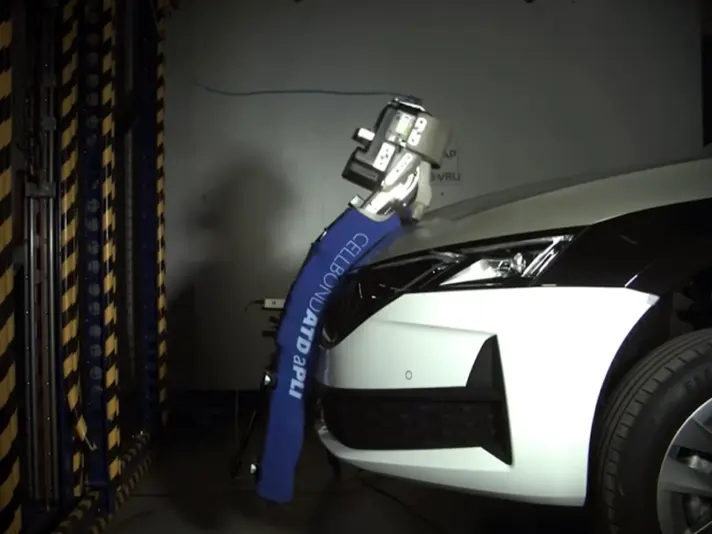
The Octavia scores 81% in protecting pedestrians, cyclists, and motorcyclists. In pedestrian impact tests, the bonnet and windscreen offered good to adequate head protection over most of their surface. Marginal and poor results were recorded around the stiff windscreen pillars, which is a common weak point in this test. Lower body protection for pelvis and femurs was good, while lower leg protection showed mixed results ranging from good to marginal.
The AEB system, called Front Assist, can detect pedestrians, cyclists, and motorcyclists, and operates from 4 to 85 km/h. Forward AEB pedestrian performance was good, with collisions avoided or mitigated in most test scenarios including turning situations. Reverse or backover AEB performance was rated marginal. Cyclist AEB performance was good across all scenarios, including turning. Motorcyclist AEB performance was also good, including in lane-keeping and turning situations. The cyclist dooring alert feature is available on some variants but was not fitted as standard on the tested vehicle.
Also Read: Mercedes-Benz G580 Electric units recalled in India over potential wheel loosening risk
Skoda Octavia safety assist
| Test Category | Score |
|---|---|
| Seat Belt Reminders | 1.00 / 1 point |
| Driver Monitoring | 0.25 / 2 points |
| Speed Assistance Systems | 2.16 / 3 points |
| AEB/AES (Car-to-Car) | 4.00 / 4 points |
| AEB/AES (Junction & Crossing) | 3.95 / 4 points |
| AEB/AES (Head-On) | 0.50 / 1 point |
| Lane Support Systems | 3.00 / 3 points |
| Total Score | 14.86 / 18 points |
The Octavia's 82% safety assist score comes from a comprehensive set of standard technology. The AEB car-to-car system showed good performance across all scenarios including junction assist and crossing, where the car can autonomously brake to avoid collisions during turns at intersections. AEB head-on performance was rated adequate. Lane support system tests returned good results, including in emergency lane-keeping scenarios.
A speed assistance system is standard on all variants, reading road signs and feeding that information to an intelligent speed limiter. Seatbelt reminders with occupancy detection are fitted to all seating positions. The driver drowsiness monitoring system is indirect, and while it detects fatigue, it does not flag distraction, which limits the driver monitoring score. Blind spot monitoring covering both cars and motorcycles is also fitted as standard.
Stay updated with all the latest happenings & developments in the automotive world by joining our official AUTOVERSE WhatsApp community. Also, don’t forget to check out our YouTube channel, AUTOVERSE by Cars24, for key details & visuals.